Advantages and Maintenance of Different Kitchen Benchtops

When it comes to kitchen design, what’s your mantra? Is it functionality and resilience? Or, do aesthetics play a more significant role for you? Do you envision a high gloss granite benchtop that oozes luxury, or a wooden option steeped in rustic charm? With so many options available, selecting the right benchtop can seem overwhelming. This article aims to dissect the stunning world of kitchen benchtops – focusing on the advantages, maintenance protocols, and design elements. As a crucial part of your kitchen decor, the right benchtop is not just a statement piece but a testament to your style and personality.
Kitchen benchtops have evolved considerably, blending functionality with aesthetics perfectly. Different materials offer distinct advantages, from the rugged durability of stone to the heat-resistant properties of stainless steel. But, it’s not just about selecting a pretty countertop; considerations like maintenance, longevity, and cost are equally indispensable.
Whether you’re renovating your existing kitchen or setting up a new one, we’re taking a deep dive into the world of kitchen benchtops brisbane. Join us as we explore the advantages and drawbacks of different benchtop materials, delve into their maintenance needs, and let’s understand this pivotal kitchen feature a bit more intimately.
Bursting the Stone Benchtop Bubble: Pros and Cons
The popularity of stone benchtops, especially varieties like granite and quartz, can be attributed to their durability and regal look. These benchtops are heat, scratch, and stain-resistant, making them perfect for a busy kitchen. However, they can be expensive, and their heavy weight demands robust cabinetry for support.
The Warmth of Wood Benchtops: Benefits and Shortcomings
Wood, often perceived as the kinder, gentler benchtop material, can beautifully warm up a kitchen space. Its ability to absorb noise and resist damaging impacts makes it a popular choice. However, regular sealing is needed to prevent water damage, and it isn’t as resistant to heat or scratch as stone.
The Industrial Edge of Stainless Steel Benchtops: Upsides and Downsides
Stainless steel benchtops are synonymous with modern, industrial design. They are hygienic, heat resistant, and easy-to-clean, but they can scratch and dent easily. And while some love the modern look, it can feel cold or clinical to others.
The Sustainability of Recycled Glass Benchtops: Pros and Cons
Recycled glass benchtops, emerging as an eco-friendly alternative, exhibit a unique mosaic look. Heat, scratch and stain-resistant, they can be a tad expensive and may chip at the edges.
Minimalist Elegance of Laminate Benchtops: Benefits and Limitations
Laminate benchtops offer an excellent lower-cost alternative with a wide array of designs. While not as durable as stone, they resist stains and are effortless to clean. However, they are prone to scratches, heat damage, and signs of wear over time.
The High-End Beauty of Marble Benchtops: Advantages and Disadvantages
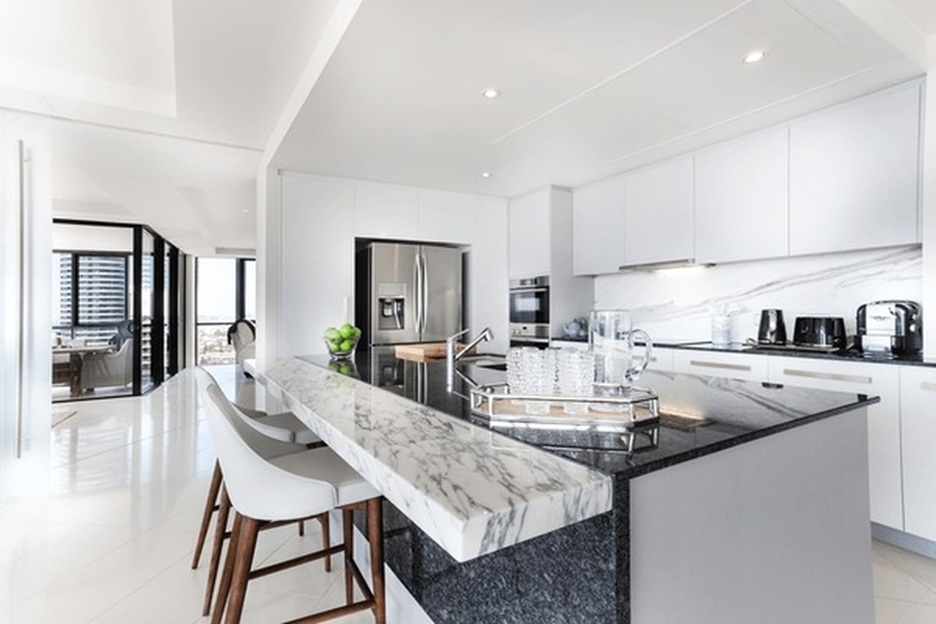
Marble benchtops scream luxury and elegance but come with a substantial price tag. While cool to the touch – perfect for baking – they stain easily and require regular sealing.
Conclusion:
Each kitchen benchtop material presents a different blend of functionality, aesthetics, maintenance needs, and cost implications. The choice ultimately unveils one’s unique aesthetic preference, lifestyle, and budget allotment. The marble may be the darling of the design world, but a homemaker might find the practicality, warmth, and lower cost of wood more appealing. Moreover, the easy cleaning protocols of stainless steel might attract a bustling commercial kitchen while a sustainable homestead would find recycled glass benchtops perfectly aligning with their eco-values.
Subsequently, understanding the ins and outs of kitchen benchtops – their strengths, weaknesses, and maintenance protocols – empowers us to balance design and functionality effectively. Because, at the end of the day, a kitchen benchtop isn’t just a functional surface, but a critical element of aesthetic expression.